
Bender insulation monitoring
Insulation monitoring devices (also known as insulation monitors) continuously monitor the insulation resistance of IT systems (ungrounded networks) and issue an alert if the resistance falls below a set threshold.
ISOMETER - Insulation Monitoring Devices
ISOSCAN - EDS Insulation FaultLocators
Take advantage of our top-notch service:
- Planning and Design
- Equipment Selection and Project Planning
- Commissioning and Testing
- Operation and Maintenance
- Expansion and Modernization
- Optimized Maintenance of Plants and Machinery
- Localization of Faulty Current Paths
- Remote diagnostics via the Internet/Ethernet
- Monitoring areas at risk of fire
- Avoiding costly plant downtime
- Providing technological support for investment protection
- Ensuring high availability of systems
- Continuously monitor systems even during downtime
- Enhanced safety against accidents in small and medium-sized plants
Type W device design with increased shock and vibration resistance
- AC, DC, or AC/DC main circuits
- AC/DC main circuits with directly connected DC components such as power converters, inverters, and controlled drives
- UPS systems, battery networks
- Heating devices with phase-angle control
- Systems with switching power supplies
- IT systems with high leakage capacitance
Insulation monitoring in systems with low insulation levels
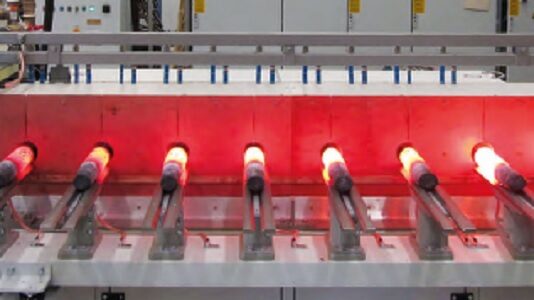
Application example: Induction furnaces are devices and systems used to heat and melt metals through inductive heating. In this process, energy is transferred via a coil through which current flows. This heating is made possible by inducing an eddy current in a metallic conductor—the workpiece to be heated.
This typically results in a very low insulation resistance in the range of several ohms (Ω) to a few kiloohms (kΩ). For this reason, reliable insulation monitoring is very important. The system must be capable of measuring low insulation values at relatively high operating voltages and triggering an alarm to prevent dangerous operating conditions from arising.
Bender insulation monitoring
Insulation monitoring devices (also known as insulation monitors) continuously monitor the insulation resistance of IT systems (ungrounded networks) and issue an alert if the resistance falls below a set threshold.
ISOMETER - Insulation Monitoring Devices
ISOSCAN - EDS Insulation FaultLocators
Take advantage of our top-notch service:
- Planning and Design
- Equipment Selection and Project Planning
- Commissioning and Testing
- Operation and Maintenance
- Expansion and Modernization
- Optimized Maintenance of Plants and Machinery
- Localization of Faulty Current Paths
- Remote diagnostics via the Internet/Ethernet
- Monitoring areas at risk of fire
- Avoiding costly plant downtime
- Providing technological support for investment protection
- Ensuring high availability of systems
- Continuously monitor systems even during downtime
- Enhanced safety against accidents in small and medium-sized plants
Type W device design with increased shock and vibration resistance
- AC, DC, or AC/DC main circuits
- AC/DC main circuits with directly connected DC components such as power converters, inverters, and controlled drives
- UPS systems, battery networks
- Heating devices with phase-angle control
- Systems with switching power supplies
- IT systems with high leakage capacitance
Insulation monitoring in systems with low insulation levels
Application example: Induction furnaces are devices and systems used to heat and melt metals through inductive heating. In this process, energy is transferred via a coil through which current flows. This heating is made possible by inducing an eddy current in a metallic conductor—the workpiece to be heated.
This typically results in a very low insulation resistance in the range of several ohms (Ω) to a few kiloohms (kΩ). For this reason, reliable insulation monitoring is very important. The system must be capable of measuring low insulation values at relatively high operating voltages and triggering an alarm to prevent dangerous operating conditions from arising.


