
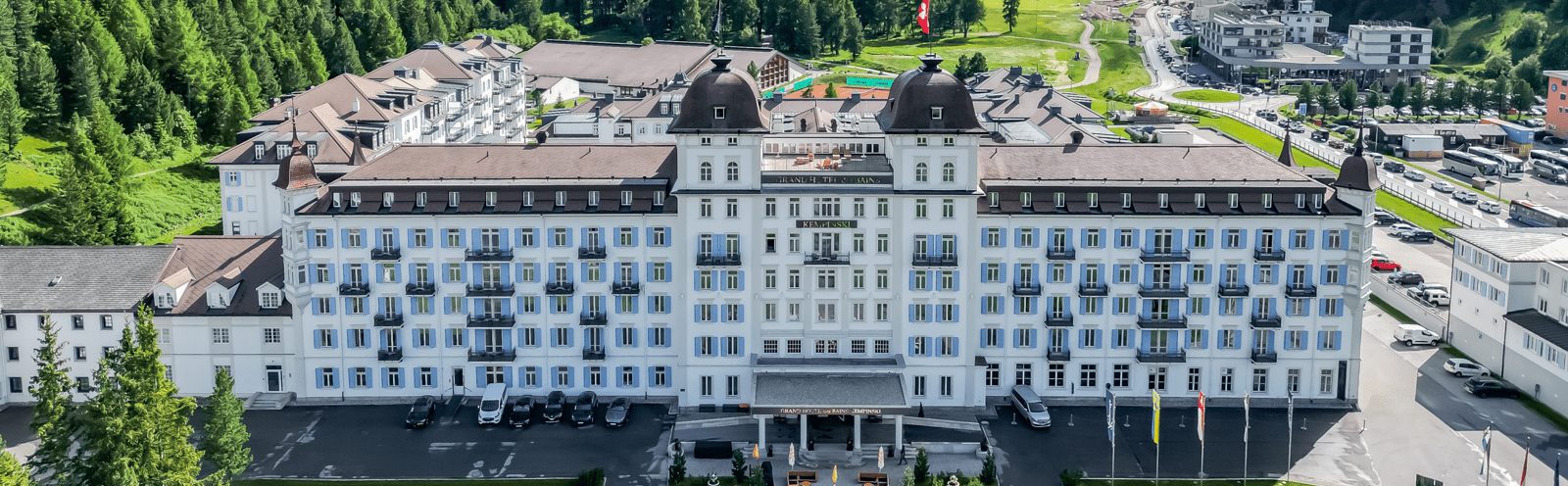
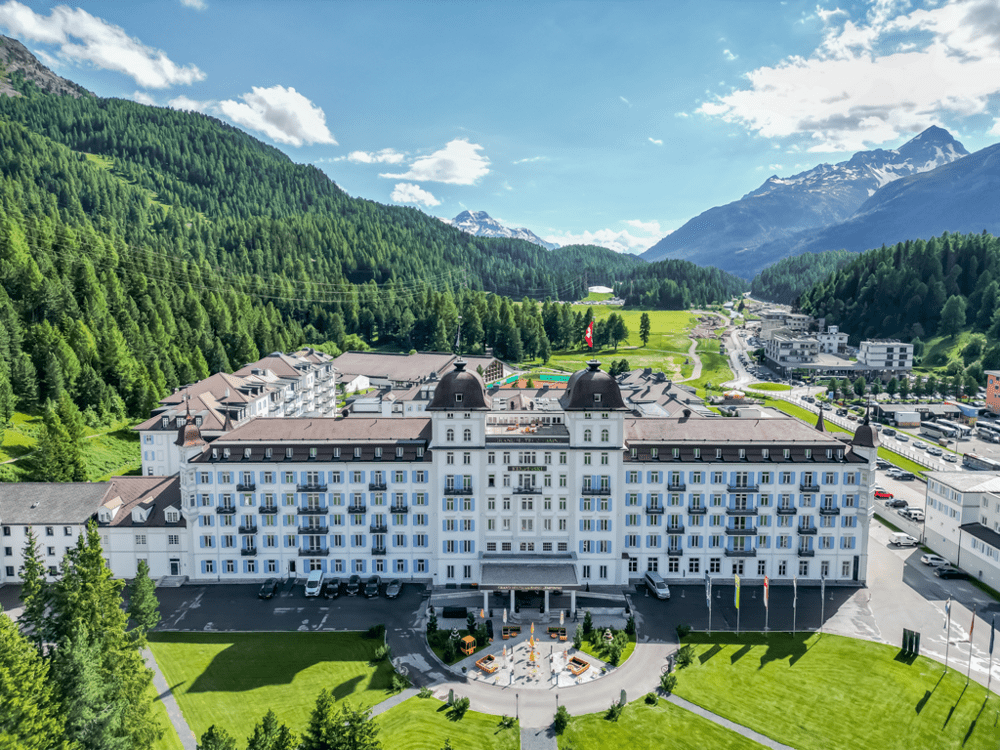
The Grand Hotel des Bains Kempinski in St. Moritz combines Swiss tradition with modern luxury. This historic building, dating back to 1864, is nestled amid the Engadin mountains and offers its guests direct access to the ski and hiking areas.
The highest level of comfort, first-class service, and a continuously modernized infrastructure make this five-star hotel an exclusive retreat in the Swiss Alps. At the same time, the ongoing expansions and modernizations place high demands on a reliable, transparent, and energy-efficient supply system.
Smart Energy Management for a Historic Grand Hotel
Reduce peak loads, provide transparency into energy flows, and maintain hotel comfort
What was the challenge to be solved?
The Grand Hotel des Bains Kempinski continuously invests in the maintenance and modernization of its buildings. However, with each expansion, energy demand and the requirements for energy supply also increase.
Additional energy consumers—such as the private saunas in the new tower suites, modern charging stations for electric vehicles, and numerous high-power appliances in the hotel kitchens—can lead to high peak loads. To make efficient use of the existing infrastructure and support the company’s goals in the areas of energy efficiency and sustainability, energy flows needed to be transparently tracked and energy consumers specifically optimized.
- Transparently track energy flows throughout the entire building complex
- Reduce power peaks through targeted load control
- Gradually integrate new energy consumers into the energy management system
- Use the existing electrical infrastructure more efficiently
- Improve energy efficiency and sustainability in the long term
- Ensure the comfort of hotel guests at all times
What were the specific requirements?
A particular challenge was the building structure, which had evolved over many years. The energy consumers are located in different areas of the sprawling hotel complex and cannot be fully controlled via a central electrical distribution panel.
A purely centralized load control system would therefore have been feasible only with considerable installation effort. What was needed was a decentralized and modularly expandable solution that consolidates information from the entire building complex and reliably coordinates the connected loads.
- Decentralized control of geographically distributed loads
- Reliable communication via the existing network infrastructure
- Modular expansion for future systems and loads
- Continuous collection and analysis of relevant energy data
- Targeted reduction of peak loads without compromising comfort
- High stability and availability of the entire system

The project at the Grand Hotel des Bains Kempinski demonstrates how even a historically developed and complex building infrastructure can be gradually integrated into a modern energy management system. With this modular solution, we are laying the groundwork for transparently tracking energy flows throughout the hotel and specifically reducing peak loads. At the same time, the system remains flexible enough to accommodate future expansions and new energy consumers at any time.
Andreas Muffler
Our approach to a successful solution
As we do at the start of every energy optimization project, we worked together to identify and analyze the largest energy consumers suitable for load optimization. We then worked closely with the building services team to determine which systems should be integrated first and which upgrades would be implemented in a later phase.
As a basis for implementation, we drew up a detailed action plan and a load optimization list. These documents outlined the technical and operational requirements for each relevant energy consumer.
Basis for Load Optimization
The following criteria, among others, were defined for each consumer:
- Electrical power
- Operational priority
- Permissible Shutdown Duration
- Appropriate shutdown and switching times
- Expected savings and optimization potential
This structured approach makes it possible to integrate consumers into load management in a targeted manner and to expand the solution step by step.
Our Solution in Detail
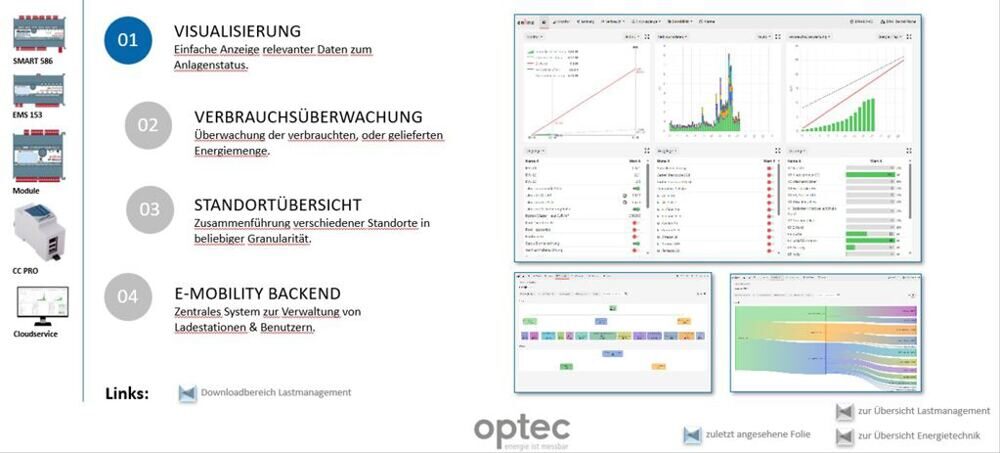
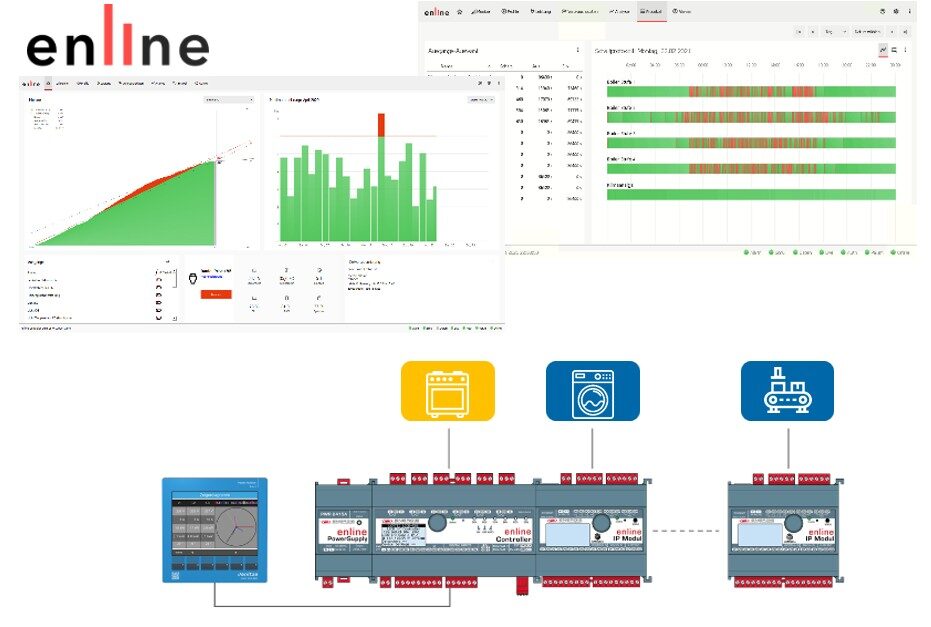
The Enline system is used for load optimization. The Enline controller receives the relevant energy data from a UMG energy meter, which communicates with the system via IP or Ethernet.
Based on this data, the controller monitors energy flows and detects when power consumption approaches a defined threshold. If necessary, the system selectively reduces the power to appropriate loads for a short time or temporarily shuts them down.
Control is handled via decentralized IP modules installed in close proximity to the respective systems. This allows even loads that are far apart to be integrated into load management without having to run all control cables all the way to the main electrical distribution panel.
The shutdowns are coordinated according to clearly defined priorities and time schedules. They go unnoticed by hotel guests. Comfort and operational processes are not affected.
What have we actually implemented?
Transparent Monitoring of Energy Flows
A modular UMG 801 system with three expansion modules is used in the main power distribution system. The measurement system records and documents the relevant energy flows of the main feeders and other measurement points. With the three expansion modules, two additional feeders per module (for a total of 6 feeders with the modules used in this application) can be monitored. Further modular expansion of the measurement units would allow for up to 20 measurement points, enabling everything to be monitored and recorded simultaneously.
The measurement data is continuously available to the Enline controller via the network connection. This provides the load management system with the necessary data to monitor current power consumption and respond in a timely manner to emerging load peaks.
Decentralized Control of Loads
For load optimization, the Enline system is used with multiple IP modules installed in a decentralized manner. The modules are located in close proximity to the respective energy consumers and enable their targeted control.
This decentralized installation offers several advantages:
- Reduced cabling and installation effort
- Flexible integration of geographically distributed systems
- Gradual expansion of the system
- Direct control of the relevant loads
- Adaptability to future hotel renovations
Which products did we use and for what purpose?
UMG 801 with three expansion modules
This modular energy meter records the relevant electrical parameters and energy flows in the main distribution panel. The data is continuously logged and made available to the load management system via the network connection.
The Enline Controller analyzes the current energy data and coordinates the connected loads. As soon as a load peak is detected, it controls the appropriate systems based on the defined priorities and permissible shutdown times.
The IP modules enable direct control of energy consumers at their respective locations. This allows even systems located far apart to be integrated into load management with minimal installation effort.
Implementation and Current Project Status
The modernization and expansion of the hotel are ongoing. Accordingly, the energy management system is also designed to be scalable.
Implementation is proceeding according to plan. Additional system components are currently in the installation and commissioning phase. New energy consumers are continuously analyzed and gradually integrated into the load optimization system.
Thanks to its modular design, the solution can be expanded with each phase of development and adapted to the future requirements of the hotel’s operations. This will result in a comprehensive energy management system for the entire building complex in the long term.
Does the solution meet expectations and requirements?
Since the entire system is still under expansion, it is not yet possible to definitively assess the specific success of the optimization efforts at this time.
As soon as sufficient operational and energy data has been collected over an extended period, the results will be evaluated in detail. The analysis will show the extent to which the implemented measures contribute to reducing peak loads and promoting more efficient energy use.
At the same time, the data will provide a reliable basis for identifying further optimization potential and for specifically integrating additional consumers into load management.

Request information
You can request further information on this topic free of charge.

Request a quote
Are you interested in a specific offer? We will be happy to provide you with a customized offer.

Download
Brochures, instructions and much more can be found in the download area.

Buy product
Do you know exactly what you need? You'll find all the products you need for your project in our web store.