

What is an active filter?
An active filter is an electronic system that actively improves the quality of the power supply. It actively compensates for harmonics and other unwanted frequencies, ensuring a clean, stable voltage for connected devices. This is particularly important in industrial settings or with complex electrical loads.
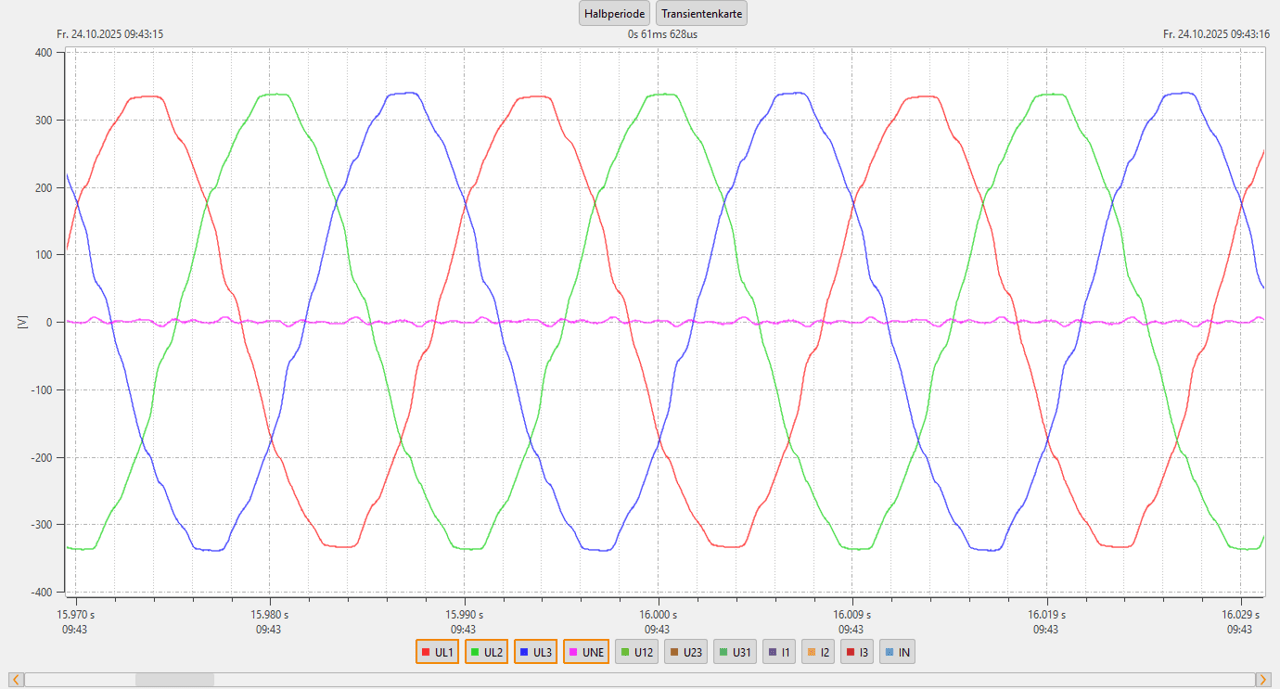
Measurements without active filters
Sine wave of all outer conductor voltages, including neutral conductor voltage:
Measurements with active filter
Sine wave of all outer conductor and neutral conductor voltages:

When is an active filter used?
What was the challenge?
In a manufacturing plant, inexplicable malfunctions repeatedly occurred during the final inspection of machines. Individual systems shut down automatically even though there were no internal faults.
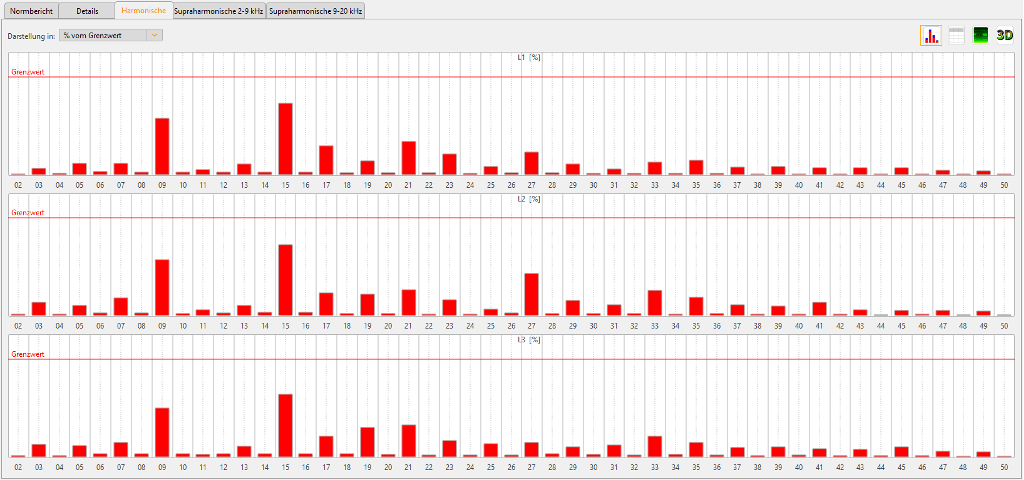
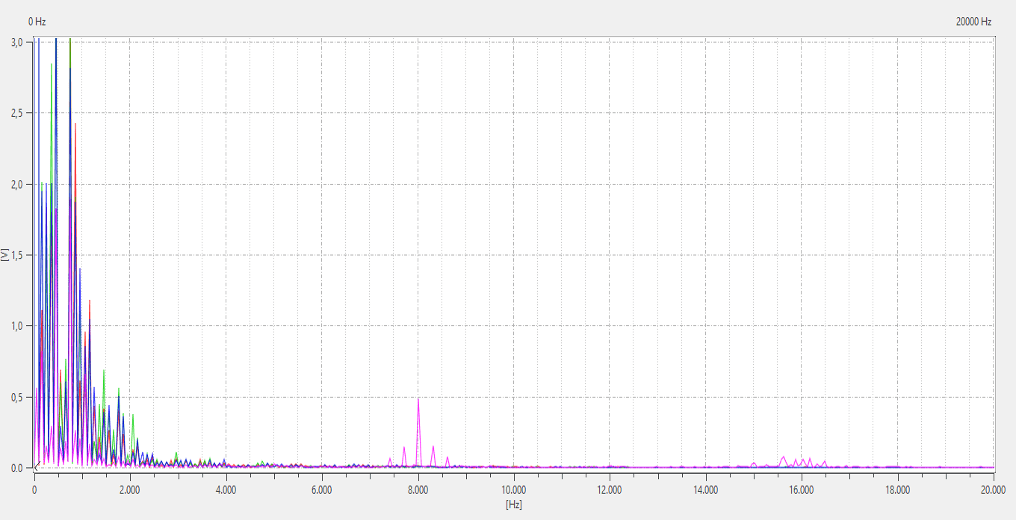
A power quality measurement with a UMG 509 provided clarity: the voltage harmonics were significantly above the permissible limits. The 9th and 15th harmonics were particularly noticeable. In addition, resonances in the 8 kHz and 16 kHz range were detected. These frequency components led to a distorted sine wave of the supply voltage and affected the sensitive measuring and control devices in production.
The cause was the high number of single-phase consumers, which caused an imbalance in the grid, as well as nonlinear consumers such as frequency converters and switching power supplies, which are common in modern production environments. They generate harmonics in the grid, which can overlap and lead to unwanted resonances.
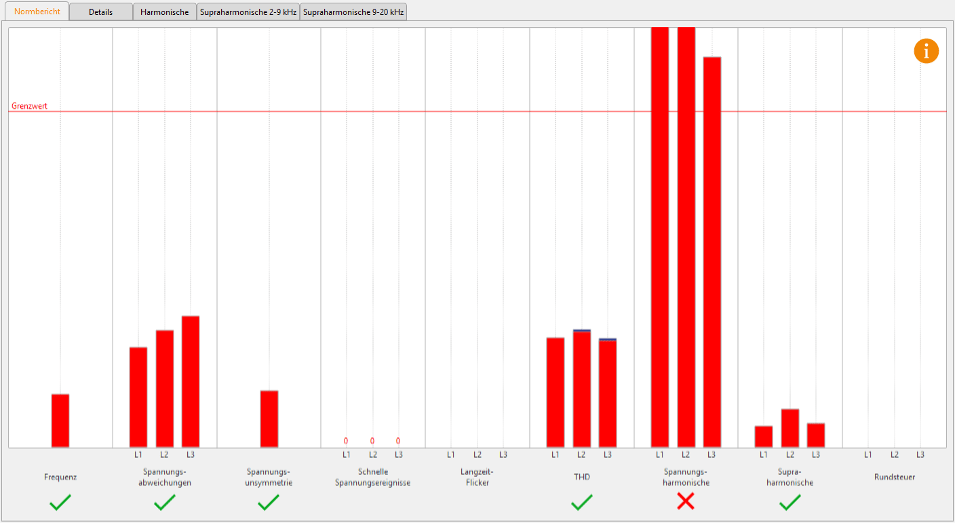
Measurements without active filters
Limit violations for voltage harmonics according to EN50160 + 61000-2-2:
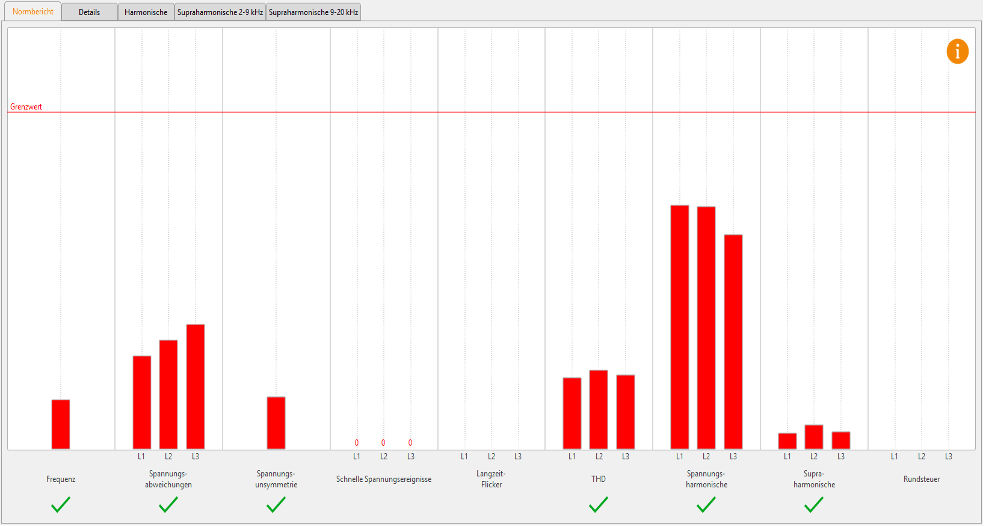
Measurements with active filter
The use of the active filter enabled the voltage harmonics to be attenuated below the standard limit value:
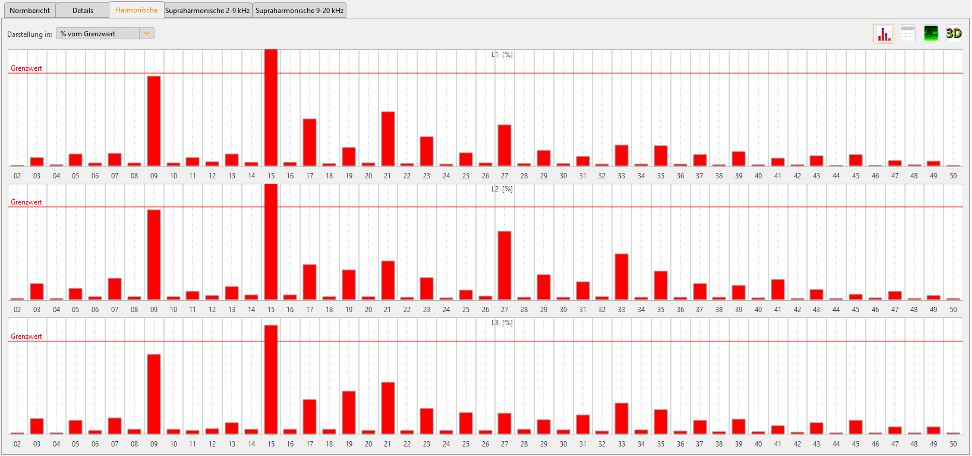
Measurements without active filters
The 9th OS is just below the limit value. The 15th OS shows a limit violation on all 3 outer conductors.
Measurements with active filter
The 9th and 15th OS were also lowered:
How was the problem solved?
An active filter was installed to improve power quality.
An active filter continuously measures the current and voltage curves in the grid and detects unwanted frequency components. These are compensated in real time by targeted counter-signals. The system works dynamically and reacts immediately to changes in the load situation, in contrast to passive filters, which are designed for fixed frequencies.
The filter was installed in the sub-distribution board of the plant and configured to specifically attenuate the 9th and 15th harmonics as well as resonances in the higher frequency range.
The installation could be carried out without any costly modifications, as the active filter operates in parallel with the mains and therefore no interruption of ongoing operations was necessary.
Measurements without active filters
Frequency spectrum from 0-20kHz including the various resonances in the range 50-2000Hz as well as in the 8kHz and 16kHz range:
Measurements with active filter
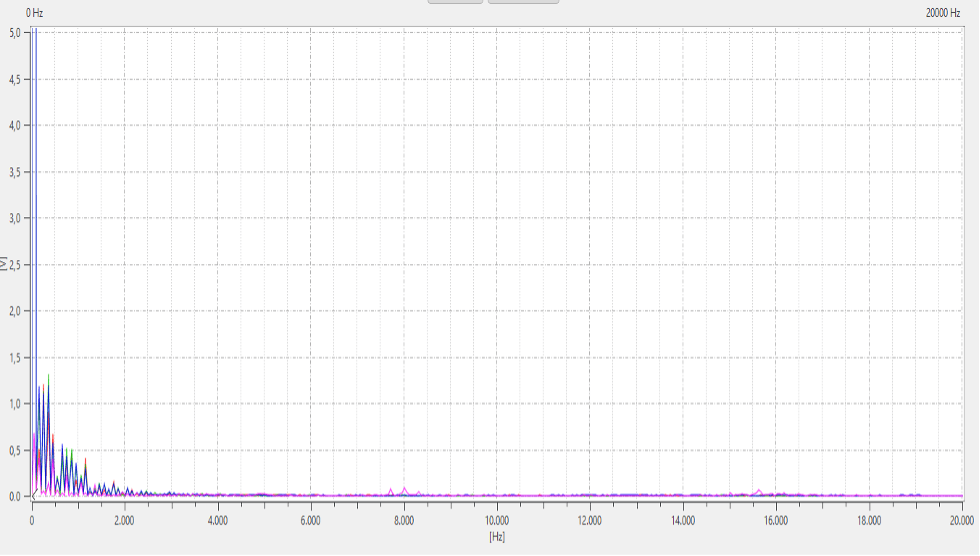
The resonances in the 8kHz to 16kHz range could also be filtered out:
What result was achieved?
What can be achieved with the active filter?
After the active filter was put into operation, there was a significant improvement in power quality.
The voltage harmonics are now below the standard limits according to EN 61000-2-2.
- The 9th and 15th harmonics were visibly reduced.
- Resonances in the 8 kHz and 16 kHz range were effectively dampened.
- The sine wave once again shows a clean, almost ideal curve.
This has completely eliminated recurring machine shutdowns. Since the measure was implemented, the production process has been running smoothly, the testing processes are reliable, and the voltage quality is permanently ensured. In addition, the reduced distortion also increases the service life of the equipment, which is an additional plus for efficiency and plant availability.
Thank you Omar for answering the questions.
If you would like to learn more about active filters, please contact us directly. We look forward to hearing from you.